NCLEX-RN · Original practice · September 29, 2026
NCLEX-RN Cardiac Prioritization Questions: Perfusion Before Routine Care
Cardiac practice questions become easier to reason through when you stop looking for a memorized diagnosis and start looking for evidence that perfusion is changing. A blood pressure, heart rate or symptom on its own may not settle the decision. Pair a new finding with the client's baseline, symptoms and timing. In an RN priority question, the most urgent client is often the person whose condition is newly deteriorating, not necessarily the person with the most familiar cardiac label.
The official NCSBN 2026 test plans describe the client-needs framework. This independent guide offers original teaching examples, not official or recalled exam items, diagnosis or treatment instructions.
What should I notice first?
Begin with changes in consciousness, chest discomfort, breathlessness, skin color, urine output and blood pressure relative to baseline. Ask whether a finding is new, persistent or worsening. A stable person awaiting routine teaching can generally wait while an unstable person needs immediate assessment. Do not interpret a number without its clinical context. If a question provides time-stamped measurements, read them in order and identify the direction of change.
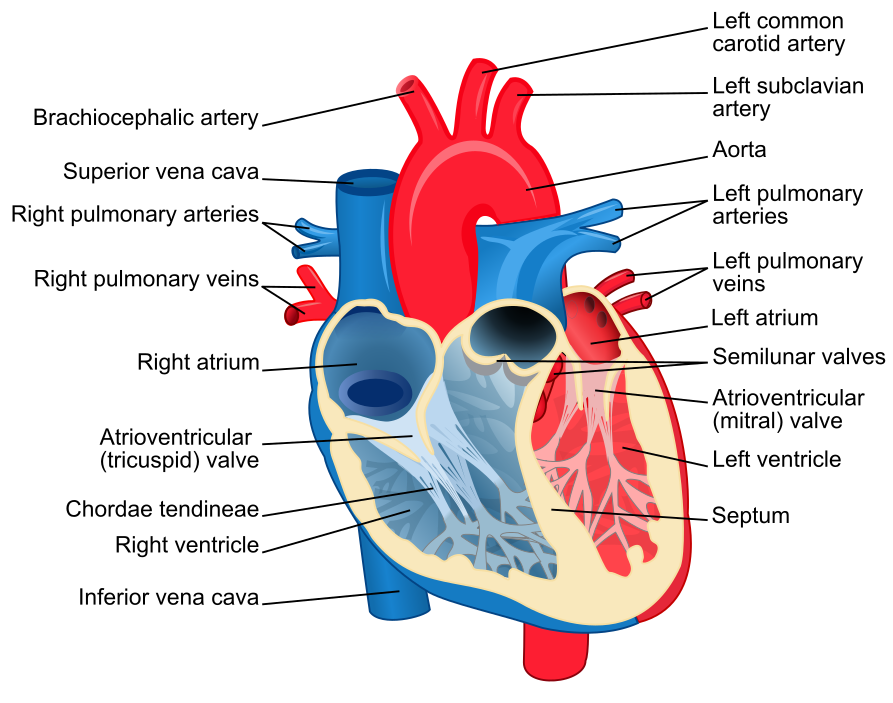
How the heart image helps
The atria receive blood; the ventricles send blood into the pulmonary and systemic circulation. On the labeled diagram, follow the right-sided flow to the lungs and the left-sided flow through the aorta. This is a study aid for connecting poor circulation to symptoms, not a substitute for assessing the individual. The diagram does not show whether a real patient has a particular condition.
How to select the safest RN action
Separate assessment from treatment. First determine whether the available data suggest an immediate threat to airway, breathing or circulation. For a newly unstable client, promptly assess and escalate according to the unit protocol. If the scenario instead describes a stable, expected finding, use the documented care plan. Do not start a drug or fluid intervention simply because it appears in a distractor; orders, history and contraindications matter.
Common trap: the dramatic diagnosis
A long-standing diagnosis can be less urgent than a sudden change in another client. Rank the clinical state described right now, not the apparent seriousness of the label. Test your reasoning by asking: which client could be harmed most by a delay in assessment? Explain the cue that makes that choice defensible. Then explain why each routine need can wait briefly rather than assuming it is unimportant.
Free original example · NCLEX-RN
Try the question
At 08:00 the RN receives four reports. Which client should be seen first?
- A client with stable chronic heart failure asking about a low-sodium menu
- A client who has become pale and dizzy with a new blood pressure of 78/42 mm Hg
- A client awaiting the next scheduled blood-pressure medication
- A client with a routine follow-up appointment tomorrow
Answer: B
New pallor, dizziness and marked hypotension suggest possible inadequate perfusion and demand prompt assessment and escalation. The other requests are important but are not described as acute instability. Assess the person rather than assuming a cause from the pressure alone.
This article question is separate from the paid workbooks and the existing question bank.
Common questions
Do I choose the lowest blood pressure every time?
No. Compare the measurement with baseline, associated symptoms and how recently it changed. The person, not a single number, determines priority.
Are these official NCLEX questions?
No. These are original educational examples linked to test-plan concepts, not actual or recalled exam questions.
Keep studying
For more system-based review, compare cardiac symptoms with the respiratory and renal guides, then practice with the free RN question collection.
Educational study content only. Local policy and jurisdiction determine real clinical practice. NCLEX® is a registered trademark of NCSBN; NCLEXVault is independent and not endorsed by NCSBN.